







How Paint Correction in Ottawa Restores Your Car’s Shine
A car’s finish takes a beating long before rust or dents ever show up. Swirl marks from the car wash, faint scratches from a decade of parking lots, a dull haze that just won’t buff out with wax — paint correction is the process built specifically to reverse all of it. Here’s what the service actually involves, why Ottawa’s climate makes it worth considering, and how to know if your vehicle is a good candidate.
What Is Paint Correction Ottawa Drivers Rely On to Restore Their Finish
Paint correction Ottawa detailers use is a controlled process of leveling the clear coat to remove surface-level defects rather than simply masking them. Wax and sealants sit on top of a flawed finish and fill in the gaps temporarily; correction actually abrades away the microscopically thin layer of clear coat sitting above the imperfection, so the defect is gone rather than hidden.
Getting there safely takes real technical skill. Before any machine touches the paint, a technician measures clear coat thickness with a paint depth gauge to map out how much material can be removed without compromising the finish. From there, a sequence of foam or microfiber pads paired with cutting and finishing compounds gradually levels the surface until it reflects light evenly again — the visual signature of a properly corrected finish.
This is also the reason correction is usually done immediately before applying a ceramic coating or paint protection film: those products bond to whatever surface they’re applied over, so a level, defect-free base makes a measurable difference in the final result.
Why Ottawa’s Climate Is Especially Hard on Paint
Few Canadian cities put a clear coat through as much seasonal stress as Ottawa. Winter road salt is the biggest offender — it accelerates oxidation and etching, and vehicles that see regular winter driving often show visible dulling within a season or two if the finish isn’t protected.
Automatic car washes compound the problem year-round. The stiff brushes and rushed drying methods common in tunnel washes are one of the most frequent causes of the fine, web-like scratching known as swirl marks. Individually these marks are invisible, but they accumulate fast, and the cumulative haze is what makes an otherwise well-kept car look tired under direct sunlight.
Between road salt in winter and wash-induced swirling the rest of the year, Ottawa vehicles tend to need correction work sooner and more often than cars in milder, drier climates.
Paint Defects That Correction Can Actually Fix
Correction is a surface-level process, which means it’s extremely effective against a specific category of damage — anything that lives in the clear coat rather than beneath it. Common defects a technician can remove include:
Swirl marks from improper washing or drying technique
Light scratches that haven’t broken through into the base coat
Etching from bird droppings, tree sap, or road salt residue
Holograms left behind by an earlier, lower-quality buffing job
General oxidation that leaves the finish looking cloudy or faded
What correction can’t touch is anything below the clear coat — deep chips, dents, or damage that’s reached the primer or metal will need body work or repainting instead. Knowing that distinction upfront helps set realistic expectations for what a correction service will and won’t change.
Our Correction Process, Step by Step
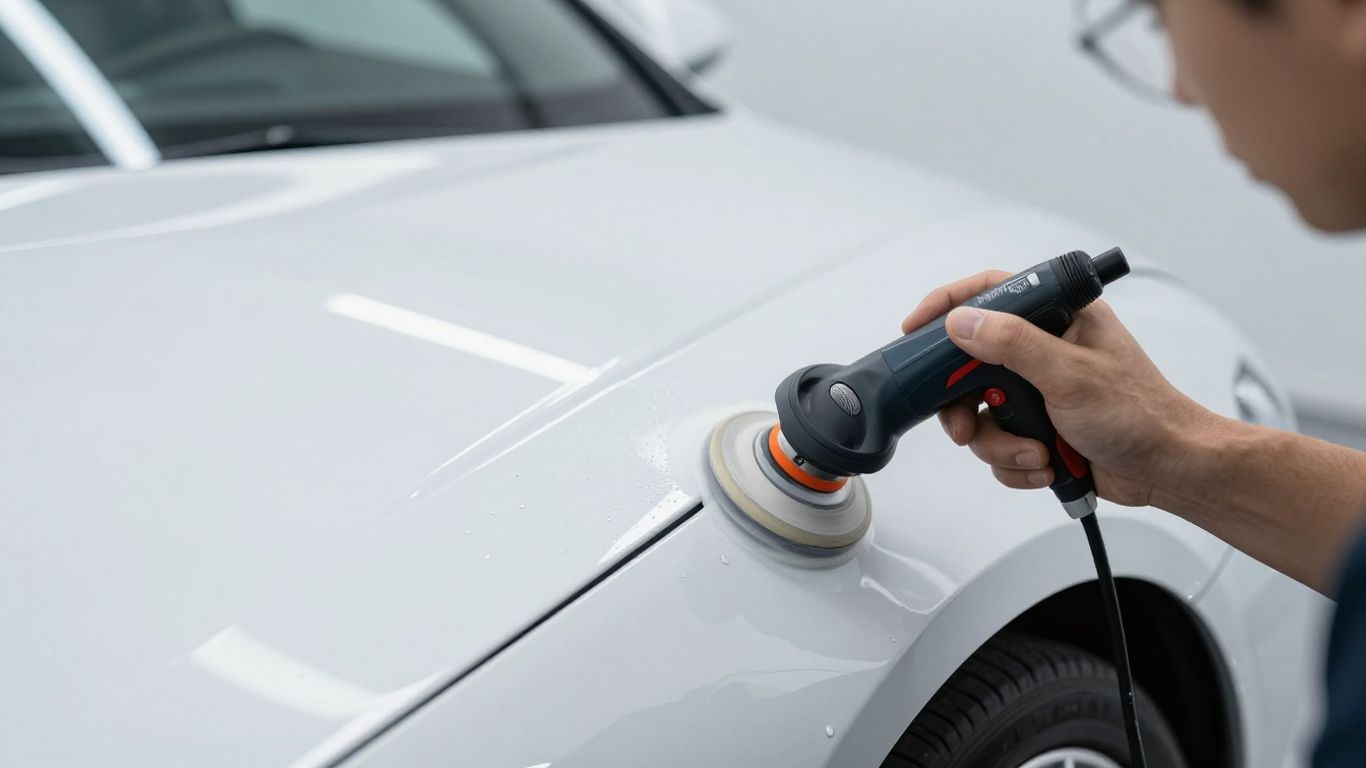
A proper job starts long before any polisher gets turned on. The vehicle first goes through a full decontamination stage — washing, then a clay bar treatment to strip out embedded iron particles and old wax buildup — so that when the polishing begins, the pads are making contact with clean clear coat and nothing else.
Once the surface is prepped, the technician measures paint thickness and builds a correction plan suited to that specific vehicle’s condition. Rough guide to what different correction levels typically achieve:
| Correction Level | Primary Goal | Aesthetic Result |
|---|---|---|
| Light Polish | Add gloss | Noticeably improved shine |
| Medium Buff | Remove swirls | Restored clarity and depth |
| Heavy Correction | Address scratches | Near-flawless finish |
Throughout the process, a good technician checks progress at every stage rather than running one pass over the whole car — the goal is removing just enough material to eliminate the defect, no more.
Why Professional Correction Beats a DIY Attempt
The margin for error here is small enough that this isn’t a great place to learn by trial and error. Clear coat is only microns thick, and an aggressive compound or the wrong pad in inexperienced hands can burn through it, leaving a defect that’s far more expensive to fix than the one you started with.
A trained technician knows exactly how much material a given panel can safely give up, which is the whole difference between a flawless result and a ruined one. Beyond the skill factor, professional shops also have access to equipment and abrasive systems that aren’t typically sold to the general public, along with mobile detailing options for owners who’d rather not leave the finish sitting outside a shop for days.
Correction done well also sets up everything that comes after it. Ceramic coatings and paint protection film both need a level, contaminant-free surface to bond to properly — skipping or rushing the correction step is one of the more common reasons a coating underperforms.
Where a Shop Like The Wrap Factory Fits Into the Picture
Paint correction is frequently just the first stage of a broader protection plan, and that’s where working with an experienced local shop pays off. The Wrap Factory, based on Canotek Road in Ottawa, has spent more than a decade in vehicle finishing work as part of the Kovar Design Inc. group, with installers averaging over 10 years of hands-on experience and a portfolio built on more than 100 ongoing local clients. Their in-house process pairs precise surface prep with services like ceramic coating and paint protection film — the kind of layered approach where correction, coating, and film installation are handled by the same experienced team rather than passed between shops. Installations are backed by warranty coverage, giving owners a documented level of accountability once the work is done. For anyone weighing correction as a step toward longer-term paint protection, that combination of tenure, specialization, and warranty backing is worth factoring into the decision.
Is Paint Correction Worth It for Your Car?
Whether correction makes sense comes down to your paint’s current condition and what you want out of the vehicle going forward. For owners planning to keep a car long-term, it’s one of the more effective ways to reset the finish and make ongoing maintenance noticeably easier — a smooth, defect-free surface simply attracts less grime and shows swirling less readily than one that’s already etched and hazy.
The impact is most dramatic on vehicles that have gone a few seasons without any real paint care. If a sale or lease return is on the horizon, a corrected finish also tends to move the needle on buyer perception and resale value more than most other pre-sale detailing steps.
Ultimately it’s a question of how much the finish matters to you and how long you plan to keep the car looking the way it did the day you bought it. A level, glossy finish isn’t purely cosmetic — it’s part of what keeps the clear coat protected and functional for years rather than months.
Conclusion
Paint correction addresses the accumulated damage that daily driving and Ottawa’s harsh seasons leave behind — swirl marks, light scratching, and the oxidation that dulls a finish over time. Done properly, by someone with the training to know exactly how much material a panel can safely lose, it restores genuine clarity rather than a temporary shine, and gives any protective coating that follows a proper surface to bond to. For a car that’s a few years into its life and starting to look tired, it’s often the single most effective thing you can do for its appearance.
Frequently Asked Questions
How often should my car receive a paint correction service?
Most vehicles only need a full paint correction every few years, provided proper washing and maintenance practices are followed afterward to minimize the return of swirl marks and light scratches.
Can paint correction remove deep chips or dents?
No. Paint correction only removes surface-level imperfections in the clear coat, such as swirl marks, oxidation, and fine scratches. Deep paint chips, dents, or structural damage require body repair or repainting.
Will the process thin my paint over time?
When performed by a trained professional using proper paint depth measurements, only a microscopic amount of clear coat is removed, making the process safe over the practical lifetime of your vehicle.
Does correction make the car easier to keep clean?
Yes. By smoothing the paint surface and eliminating tiny scratches that trap dirt, paint correction helps reduce grime buildup and makes routine washing quicker and more effective.
Can I wash my car right after the service?
If a protective sealant or ceramic coating has been applied after the correction, it’s recommended to wait 24 to 48 hours before washing the vehicle to allow the protection to cure properly.
Can this be done on older or classic cars?
Yes. Paint correction can be performed on older and classic vehicles, but older single-stage paints require different techniques than modern clear coat systems. Choose a technician experienced with vintage finishes.
Is paint correction safe for matte or satin finishes?
No. Traditional paint correction involves polishing to increase gloss, which will permanently alter and damage the appearance of matte or satin paint finishes. These surfaces require specialized care instead.